



International transactions
In any trade the main goal of the seller or the exporter is to get paid for the products or the services they provide. On the other hand, the buyer or the importer needs to obtain the goods, and make sure that they are in good condition. These transactions are done in different ways, depending on the preferences of both parties. They are called methods of payment.
Methods of payment
Cash-in-advance is the cheapest method of payment because it involves little documentation. The seller sends the invoice to the buyer, and the latter gets the goods, which are paid for prior to the seller shipping those goods. It can be very advantegous for the seller, but risky for the buyer. It is based on trust, and surprisingly as it may seem, it is widely used. In fact, it is the method we all use when shopping on the internet. We see the product online, pay, and then it is delivered to our homes.
-
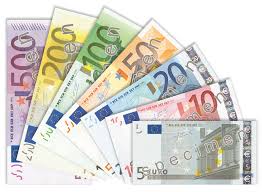
- Euro notes. Source: Wikipedia
The most common method in international trade is the Letter of Credit (L/C), which falls into the bank guarantees. It is a commitment by a bank on behalf of the buyer or importer that the payment will be made to the beneficiary, the seller or exporter, provided that the terms and conditions stated in the L/C have been met. It is one of the most versatile and secure instruments for both parties; the buyer pays the amount agreed to the bank, and the bank will issue a Letter of Credit. It is irrevocable.
The Bill of Exchange is cheaper than the Letter of Credit. The exporter nominates a bank to collect the money. The shipping document goes to the bank, the importer pays into the bank and gets the title for the goods. The risk is that the importer might not pay the money and then the goods are stuck in a port somewhere in the world. In this case, the exporter needs bank guarantees in order to be protected.
Companies that have been trading on a regular basis and built up a relationship often use the Open Account, which is a sort of credit on the goods. The exporter or manufacturer gives a 60-day, a 30-day or 90-day credit to the importer to pay. Therefore, the goods are sent and the invoice has to be paid before the 30, 60 or 90 days agreed.
Another method is Cash Against Documents, where the payment is triggered by the presentation of documents by the international exporter. Some types of documents may be required, such as the commercial invoice, the packing list, or the bill of lading (B/L), as well as other certificates like the certificate of origin. They are usually certificates which are required for customs clearance or assurance of quality for the buyer.
In the case of Consignments, the goods are sent to the importer and the payment is made after the goods are sold. They sign a consignment agreement, which is an agreement between a consignee and consignor for the storage, transfer, sale or resale and use of the commodity. The consignee may take goods from the consignment stock for use or resale subject to payment to the consignor agreeably to the terms bargained in the consignment agreement. It seems advantegeous to the importer, but in many cases the importer needs to hold on to some level of stock locally to be able to maintain the supply in the market and they do not have a working capital to keep that amount of stock.
| Amount (n): quantitat | Deliver (v): lliurar |
| Bank guarantee (n): garantia bancària | Exporter (n): exportador |
| bargain (v): negociar | Importer (n): importador |
| Based on trust (adj): garantia bancària | Invoice (n): factura |
| Beneficiary (n): beneficiari | Irrevocable (adj): irrevocable |
| Bill of exchange (n): lletra de canvi | Issue (v) (a letter of credit): emitir (una carta de crèdit) |
| Bill of lading (n): coneixement d’embarcament | Letter of credit (L/C) (n): carta de crèdit o crèdit documentari |
| Build up a relationship (v): consolidar una relació | On behalf of (loc prep): de part de |
| Buyer (n): comprador | Open account (n): open account |
| Cash against documents (n): remesa documentària o pagament contra documentació | Packing list (n): llista de paqueteria |
| Cash-in-advance (n): pagament avançant o bestreta | Party (n): part (implicada) |
| Certificate of origin (n): certificat d’origen | Provide (v): proporcionar/oferir |
| Collect (v): recollir | Seller (n): venedor |
| Commercial invoice (n): factura comercial | Shipping (v): enviar |
| Commitment (n): compromís | Storage (n): emmagatzemament |
| Commodity (n): mercaderia | Title (n): títol |
| Consignment (n): consignació | Trade (n): comerç |
| Customs clearance (n): despatx de duana | Transfer (n): transferència |
Payment terms
The goal of the vendor or the supplier is cash flow. Therefore, they look into mazimizing the cash they have got, whether extending payment terms or receiving money upfront. The payment terms specify when that money is due and how it should be paid, and it should always be included in the conditions.
See the following list of payment terms, which specify the timeframe between the moment of the purchase and the settlement of the debt.
| Payment terms | Meaning |
|---|---|
| Net monthly account payment | Due on last day of the month following the one in which the invoice is dated |
| PIA | Payment in advance |
| Net 7 | Payment seven days after invoice date |
| Net 10 payment | Payment 10 days after invoice date |
| Net 30 payment | Payment 30 days after invoice date |
| Net 60 payment | Payment 60 days after invoice date |
| Net 90 payment | Payment 90 days after invoice date |
| EOM | End of month |
| 21 MFI | 21st of the month following invoice date |
| 1% 10 Net 30 | 1% discount if payment received within ten days otherwise payment 30 days after invoice date |
| COD | Cash on delivery |
| Cash account | Account conducted on a cash basis, no credit |
| Letter of credit (L/C) | A documentary credit confirmed by a bank, often used for export |
| Bill of exchange | A promise to pay at a later date, usually supported by a bank |
| CND | Cash next delivery |
| CBS | Cash before shipment |
| CWO | Cash with order |
| 1MD | Monthly credit payment of a full month’s supply |
| 2MD | As above plus an extra calendar month |
| Cash flow (n): flux de fons | Shipment (n): enviament |
| Goal (n): objectiu | Supplier (n): proveïdor |
| Debt (n): deute | Timeframe (n): període de temps |
| Due (adj): vençut | Upfront (adv): a la bestreta |
| Purchase (n): compra | Vendor (n): venedor |
| Settlement (n): liquidació |
Language in use
Late payments are a common occurrence in business. In order to get invoices paid on time, the vendor should establish payment terms in the contract, and send invoices out promptly. Even so, your customer might fail to settle the debt on time. In this case, it is advisable to send a letter to let the customer know that you are aware that there is an outstanding payment. In the first reminder requesting payment you should be polite as the customer may have a good reason for not paying on time.
-
- Typically a bill is past due if the borrower is 30 days past the payment.
Payment reminder letter
The following are some useful phrases used in late payment reminders:
- This is a friendly payment reminder, as your account with us now appears as past due.
- I am writing to you regarding the above invoice, dated…
- This invoice is still outstanding.
- We would like to bring the following invoice ## to your immediate attention.
- According to our records, we have not yet received your remittance.
- As you know, our payment terms are 30 days from the issue date of the invoice.
- This matter requires your immediate attention.
- Please remit payment as soon as possible.
- Despite sending you several reminders, we have received no response from you about your seriously past due account.
- I am prepared to give you a final opportunity to settle your account.
- We feel there is no recourse but to put your account in the hands of our collection agency.
- Thank you very much for your attention to this matter and your continued business.
In the letter below, the managing director of Glossy Ltd. writes a request for payment to Mr Smith, from the company Unicorn Ltd.
Example of request for payment
23 February 2017
Unicorn Ltd.
24 Kenyon way
SW1452 Salford
United Kingdom
Dear Mr Smith,
In our letter of 5 January it was agreed that you would settle the outstanding balance of €150,000 on account 2100 25654428 55 2554 on 17 January. This agreement was based on the understanding that failure to comply would result in our legal representatives taking over the matter.
Unfortunately, settlement was not made on 17 January. If we have not received your remittance by 12 March, we will instruct our legal representatives to take immediate action to recover the debt.
Yours sincerely,
Henry Lovecraft
Manager Director
Glossy Ltd.
| Account (n): compte | Past due (v): vençut |
| Collection agency (n): agència d’impagaments | Payment terms (n): terminis de pagament |
| Customer (n): client | Records (n): arxius |
| Failure to comply (n): incompliment | Recover the debt (v): recuperar el deute |
| Invoice (n): factura | Reminder (n): recordatori |
| Issue date (n): data d’emissió | Remittance (n): remesa |
| Late payments (n): morositat | Settle your account (v): liquidar el seu compte |
| Managing director (n): director general | Settlement (n): liquidació |
| Outstanding balance (n): saldo pendent | Take over the matter (v): fer-se càrrec de la qüestió |
| Outstanding payment (n): pagament pendent | Vendor (n): venedor |
Communication: language issues
In all the communicative situations, accuracy is very important, but it is especially so in the working environment, where misunderstandings can have negative consequences for the company and for yourself. For this reason, it is necessary to be careful with the use of language in order to express your message as clearly as possible.
To avoid misunderstandings in your international relationships, you should consider such aspects as for example the cultural differences with other countries, the use of the formal or informal style, the use of false friends and phrasal verbs, or the correct pronunciation of certain words which are only distinguished by their stress.
Words as verbs and nouns
In English, it is common to find the same word functioning as a noun and as a verb. Very often, these words have the same spelling and pronunciation, so the only way of distinguishing the meaning is from the context. Some examples of these are:
- Noun: love (Cat. amor); verb: love (Cat. estimar)
- Noun: water (Cat. aigua); verb: water (Cat. regar)
- Noun: walk (Cat. passeig); verb: walk (Cat. passejar, caminar)
- Noun: drive (Cat. trajecte en cotxe); verb: drive (Cat. conduir)
- Noun: fall (Cat. caiguda); verb: fall (Cat. caure)
- Noun: mistake (Cat. error); verb: mistake (Cat. confondre)
Sometimes, the words have the same spelling, but they are stressed in different syllables, as in the following examples (stressed syllables in bold type):
- Noun: increase (Cat. augment); verb: increase (Cat. augmentar)
- Noun: decrease (Cat. descens); verb: decrease (Cat. descendre,baixar)
- Noun: import (Cat. importació); verb: import (Cat. importar)
- Noun: export (Cat. exportació); verb: export (Cat. exportar)
- Noun: discount (Cat. descompte, rebaixa); verb: discount (Cat.descomptar, rebaixar)
- Noun: refund (Cat. devolució); verb: refund (Cat. tornar, fer una devolució)
- Noun: insult (Cat. insult); verb: insult (Cat. insultar)
- Noun: protest (Cat. protesta); verb: protest (Cat. protestar)
- Noun: update (Cat. actualització); verb: update (Cat. actualitzar)
- Noun: misprint (Cat. error tipogràfic); verb: misprint (Cat. cometre una errada tipogràfica)
- Noun: survey (Cat. enquesta) verb: survey (Cat. enquestar, fer una enquesta)
- Noun: detail (Cat. detall); verb: detail (Cat. detallar, donar detalls)
- Noun: upset (Cat. trasbals); verb: upset (Cat. trasbalsar)
Some other words have the same spelling and different syllable stress, but also different meanings as a noun and as a verb. Some examples of these words are:
- Noun: contract (Cat. contracte); verb: contract (Cat. contraure’s)
- Noun: conduct (Cat. conducta, actitud); verb: conduct (Cat. dirigir, portar a terme, realitzar)
- Noun: object (Cat. objecte); verb: object (Cat. objectar, posar objeccions)
- Noun: subject (Cat. assignatura, tema, subjecte [gramatical]); subject (Cat. sotmetre)
- Noun: present (Cat. regal); verb: present (Cat. presentar)
- Noun: desert (Cat. desert); verb: desert (Cat. desertar, abandonar)
False friends
Many English words, especially those in the fields of business, commerce, science and technology, have a Greek or Latin origin, so they can be easily recognized by a Spanish or Catalan speaker. For example, you do not probably need a dictionary to understand the meaning of words like information, university, computer, reality, family, television, history, and many others.
See the annex called “List of false friends” for the most common false friends in Catalan and Spanish.
However, there are some words that look similar in the two languages, but they do not have the same meaning. These words are called false friends because they apparently have one meaning, but they actually have a different one.
There are not many English false friends, but they are very frequently used, so it is very important to know their meanings and be careful to use the correct word to avoid misunderstandings.
The table below shows a list of some common false friends.
| English word | Catalan translation | Similar Catalan word | English translation |
|---|---|---|---|
| actually | de fet | actualment | currently, now |
| approve | acceptar, aprovar | aprovar (un examen) | pass |
| assist | ajudar, atendre | assistir a | attend, go to |
| conductor | director d’orquesta | conductor | driver |
| disgust | fàstic | disgust | upset (adj.) |
| exit | sortida | èxit | success |
| fabric | teixit | fàbrica | factory |
| lecture | conferència, xerrada | lectura | reading |
| library | biblioteca | llibreria | bookshop, bookstore |
| motorist | automobilista | motorista | motor cyclist |
| preservative | conservant | preservatiu | condom |
| sensible | sensat, amb seny | sensible | sensitive |
Phrasal verbs
In English, we often use verbs accompanied by a small word called adverb particle, which gives a special meaning to the verb. This meaning is different from the separate meanings of the verb and the particle.
The verbal units composed of verb + adverb particle are called phrasal verbs. Phrasal verbs are more common in the oral and informal language than in the written, formal language.
See the annex “List of phrasal verbs” for a list of the the most common phrasal verbs in English. It includes a translation of the verbs into Catalan.
Here are some widely-used phrasal verbs (with their meanings in Catalan):
- get up (Cat. llevar-se)
- wake up (Cat. despertar-se)
- break down (Cat. avariar-se, espatllar-se)
- look out (Cat. vigilar, anar amb compte)
- turn on (Cat. engegar, posar en marxa, encendre [un llum])
- turn off (Cat. apagar [un llum, un aparell])
- fill in (Cat. omplir [un formulari])
- take off (Cat. enlairar-se [un avió], treure’s [una peça de roba])
- turn up (Cat. presentar-se, aparèixer [en un lloc])
- blow up (Cat. esclatar, explotar)
- throw away (Cat. tirar, llançar)
- come back (Cat. tornar, retornar [d’un lloc])
- put off (Cat. posposar, retardar)
- find out (Cat. descobrir, trobar)
Sometimes, the phrasal verb has an object. In this case, there are two possible positions for the object:
- Don’t forget to turn off the lights / Don’t forget to turn the lights off (Cat. No t’oblidis d’apagar els llums).
- Can you fill in this form please? / Can you fill this form in please? (Cat. Pot omplir aquest formulari, si us plau?).
- I think I’ll throw away these old magazines / I think I’ll throw these old magazines away (Cat. Em sembla que llançaré aquestes revistes velles).
But if the object is a pronoun, it is always placed between the verb and the particle. Examples:
- Don’t forget to turn them off (Cat. No t’oblidis d’apagar-les).
- Can you fill it in please? (Cat. Pot omplir-lo, si us plau?).
- I think I’ll throw them away (Cat. Em sembla que les llançaré).
Some phrasal verbs can also add a preposition, as for example:
- look forward to (Cat. esperar amb il·lusió)
- keep up with (Cat. mantenir-se a l’alçada de, mantenir el ritme de)
- cut down on (Cat. reduir [una activitat])
- put up with (Cat. tolerar, suportar, aguantar [una persona o situació])
Prepositional verbs and verbs + prepositional phrase
We should not confuse the phrasal verbs with the prepositional verbs. The prepositional verbs are those that have a preposition before the object. For example:
- look at (Cat. mirar): he looked at me.
- listen to (Cat. escoltar): I’ll listen to the radio.
- belong to (Cat. pertànyer a): this desk belongs to Mrs Smith.
- apply to (somebody) (Cat. demanar a [algú]): I’ll apply to the manager.
- apply for (something) (Cat sol·licitar [una cosa]): I applied for a job.
- speak with (Cat. parlar amb): you should speak with your boss.
- consist of (Cat. estar compost de): the presentation consists of two parts
It is also very common to use a verb indicating movement (like go, walk, run, drive, fly, swim) with a prepositional phrase. For example:
- Walk along the street (Cat. Ves [camina] pel carrer).
- I drove through the city in only ten minutes (Cat. Vaig conduir d’una punta a l’altra de la ciutat en només deu minuts).
- Please don’t go up those stairs (Cat. Si us plau, no pugis per aquella escala).
- I swam across the lake (Cat. Vaig nedar d’una banda a l’altra del llac).
In these examples, the verb and the preposition retain their original meaning.
Prefixes and suffixes
A prefix refers to the element that is placed at the beginning of a word to modify or adjust the meaning of that word, whereas the suffix is placed at the end of the word. Both prefixes and suffixes form part of the word to which they are joined and cannot be separated. Most of them are attached to the word, as in “bilingual”, but a few are separated from the word by a hyphen (-), as in “extra-curricular”.
The knowledge of the meaning of the most important prefixes and suffixes is important because it makes it easier to guess the meaning of unknown words. For example, if we know the meaning of the prefix “mis-” (wrongly) and we know the meaning of the verb “understand” (Cat: entendre), we can easily guess the meaning of “misunderstand” (Cat: entendre malament), and this even though it is the first time that we see that word.
Prefixes and suffixes can be added to nouns, adjectives and verbs to express a new idea. Suffixes are basically used to change the part of speech of a word, that is, to turn adjectives into nouns, nouns into adjectives, etc.
You can create words by adding the appropriate prefixes or suffixes. For example, you can add the suffix -like to a noun (like in childlike) to form a new adjective: teacher-like (Cat. que es comporta com un professor), animal-like (Cat. que és o es comporta com un animal), etc. In these cases, the suffix is separated from the word by a hyphen (-) because the new word has not been incorporated into the language.
Prefixes
The majority of prefixes are the same and have the same meaning as in Catalan and Spanish. For example: anti-, auto-, cyber-, extra-, hyper-, inter-, kilo-, micro-, mini-, mono-, multi-, neo-, photo-, post-, pre-, semi-, sub-, super-, tele-, trans-, vice-, etc.
However, there are some others that have a different origin and are not so easy to understand. The table below shows some common English prefixes:
| Prefix | Added to… | Usual meaning | Examples |
|---|---|---|---|
| de- | verbs | reversing action | deregulate |
| dis- | adjectives, nouns, verbs | not, opposite | disloyal, disorder, discover |
| en- | adjectives, nouns | make, put in | enable, endanger |
| fore- | nouns, verbs | before | foreground, foretell |
| ill- | past particples | badly | ill-used |
| mid- | nouns | in the middle of | mid-90, mid-century, mid-way |
| mis- | nouns, verbs | wrongly | misuse, misunderstand, mispelling |
| out- | nouns, verbs | be more than | outcast, outrun, outnumber |
| over- | nouns, verbs | too much | over-confident, overheat, oversize |
| un- | adjectives, verbs | opposite, not | unimportant, undress |
Suffixes
The tables below show a list of common English suffixes and their meanings:
| Suffix | Added to… | Meaning | Examples |
|---|---|---|---|
| -ee | verbs | object of the verb | employee, interviewee |
| -er/-or | verbs | person/thing that does the action of the verb | manager, director |
| -ess | nouns | female | actress, waitress, lioness |
| -ful | nouns | quantity contained in | handful, spoonful |
| -ship | nouns | quality of | friendship, relationship |
| Suffix | Added to… | Meaning | Examples |
|---|---|---|---|
| -able | verbs | that can be done | manageable, understandable |
| -ful | nouns | full of | useful, careful |
| -ish | adjectives, nouns | tending to, similar to | bluish, childish |
| -less | nouns | without | homeless, armless |
| -like | nouns | like, behaving like | childlike, homelike |
| -ous | nouns | having | numerous, vicious |
| -ly | adjectives | in that manner | quietly, quickly |
| -wards | prepositions of place, nouns | in that direction | backwards, homewards |
Adjectives in -ed and adjectives in -ing
The suffixes -ed and -ing are added to verbs in order to form adjectives. These adjectives are easily confused because they have similar meanings, but there is a difference:
- The adjectives ending in -ed refer to a temporary state. These adjectives form the past participle of the corresponding verbs. For example: interested, terrified, embarrassed, fascinated.
- The adjectives ending in -ing refer to a permanent characteristic. For example: interesting, terrifying, embarrassing, fascinating .
The table below shows some common adjectives in -ed and -ing:
| -ed | -ing | Meanings |
|---|---|---|
| amazed | amazing | sorprès- sorprenent |
| amused | amusing | divertit - divertit |
| annoyed | annoying | molest - molest |
| astonished | astonishing | sorprès - sorprenent |
| confused | confusing | confós - confós |
| depressed | depressing | deprimit - depriment |
| disgusted | disgusting | fastiguejat - fastigós |
| embarrassed | embarrassing | avergonyit - que fa vergonya |
| excited | exciting | emocionat - emocionant |
| exhausted | exhausting | esgotat - esgotador |
| fascinated | fascinating | fascinat - fascinant |
| frightened | frightening | espantat - espantós |
| horrified | horrifying | horroritzat - horrorós |
| interested | interesting | interessat - interessant |
| satisfied | satisfying | satisfet - satisfactori |
| shocked | shocking | sorprès - sorprenent |
| terrified | terrifying | aterroritzat - terrorífic |
| tired | tiring | cansat - cansat |
| worried | worrying | preocupat - preocupant |
'Ser i estar'
In Catalan and Spanish, there is a different verb for each adjective: Cat. ser interessant and estar interessat.
In English, however, there is only one verb (be), so the ending is the only way of distinguishing the meanings of the adjectives.
Here are some examples in their contexts:
- I met a very interesting person (Cat. Vaig conèixer una persona molt interessant).
- I’m very interested in computering (Cat. Estic molt interessat en la informàtica).
- The scene was terrifying (Cat. L’escena era terrorífica).
- I certainly was terrified by the scene (Cat. Vaig quedar certament horroritzat per l’escena).
- I think the situation was embarrassing (Cat. Crec que la situació va ser incòmoda).
- You’re right. I felt embarrassed, too (Cat. Tens raó. Jo també em vaig sentir incòmode).
- I find social networks fascinating (Cat. Trobo les xarxes socials fascinants).
- I don’t. I’m not at all fascinated (Cat. Jo no. Jo no estic gens fascinat).
Easily confused words
As in all the languages, in English there are many words that can be easily confused by language learners for several reasons. It might be because of minor differences in spelling or similarity in their meanings, but in any case, they are often used wrongly and can generate mistakes and create misunderstandings.
Here is a list of commonly used words which are often confused.
Advise / Advice:
There is a difference in spelling and in meaning.
- Advise (Cat. aconsellar) is a verb. For example: I advise you to be patient (Cat. T’aconsello que tinguis paciència).
- Advice (Cat. consell) is a noun. For example: My only advice is that you are patient (Cat. El meu únic consell és que tinguis paciència).
Practise / Practice:
In British English, there is a difference in spelling and meaning between these two words, as in advise/advice:
- Practise (Cat. practicar) is a verb. For example: You should practise English more often (Cat Hauries de practicar l’anglès més sovint).
- Practice (Cat. pràctica) is a noun. For example: You need more practice to improve your pronunciation (Cat. Et cal més pràctica per a millorar la pronunciació).
In American English, there is only one spelling (Practice), but two meanings for this word. Examples:
- Verb: You should practice English more often (Cat Hauries de practicar l’anglès més sovint).
- Noun: You need more practice to improve your pronunciation (Cat. Et cal més pràctica per a millorar la pronunciació).
Life / Live:
Apart from differences in spelling and meaning, there is also a clear difference in pronunciation between these two words:
- Life (pronounced: /laıf/) (Cat. vida) is a noun: I lead a very healthy life (Cat. Porto una vida molt saludable).
- Live (pronounced: /lıv/) (Cat. viure) is a verb: I live in Barcelona (Cat. Visc a Barcelona).
A related word is the adjective alive (Cat. viu/va), which is the opposite of dead (Cat. mort/a), as in: He’s still alive; I can notice his breathing (Cat. Encara és viu; puc notar com respira).
Please notice that the plural form of life is lives (pronounced /laivz/). Do not confuse with the third person singular of the present simple of the verb: he lives (pronounced /livz/).
Price / Prize:
These two words are both nouns. There is a difference in spelling and meaning and there is also a slight difference in pronunciation: price is pronounced /prais/ whereas prize is pronounced /praiz/.
See the annex called “English Phonetic Symbols” to see a description of the phonetic signs.
- Price (Cat. preu): The price of this product has increased a lot (Cat. El preu d’aquest producte ha pujat molt).
- Prize (Cat. premi): She won the first prize in a painting competition (Cat. Va guanyar el primer premi en un concurs de pintura).
Job / Work:
The meanings of these two words are very similar, but there is a grammatical difference between them which provokes frequent mistakes in their use.
- Job (Cat. feina, lloc de treball) is a countable noun, which means that it can be used in plural. For example: I’ve had many jobs in my life, but I am currently unemployed (Cat. He tingut moltes feines a la meva vida, però ara mateix estic a l’atur).
- Work (Cat. treball) is an uncountable noun, which means that it cannot be used in plural. For example: I’ve got a lot of work at the weekend (Cat. Tinc molta feina aquest cap de setmana).
Apart from a noun, work can also be a verb, as in: I work five days a week (Cat. Treballo cinc dies a la setmana).
Trip / Travel:
There is a little difference in meaning between these two nouns, but there is also a grammatical difference.
- Travel (Cat. viatge) refers to the act of travelling. In this case, it is an uncountable noun. For example: Nowadays air travel can be very cheap (Cat. Avui en dia viatjar en avió pot ser molt barat).
- Trip (Cat. viatge, desplaçament) refers to the act of going from one place to another. In this case, it is a countable noun. For example: I made a trip to Paris last week (Cat. La setmana passada vaig fer un viatge a París).
Travel is very frequently used as a verb, as in: I must travel a lot in my job (Cat. A la meva feina haig de viatjar molt).
Other related words are journey (Cat. viatge), which can be used as a synonym of ‘trip’ and voyage (Cat. viatge, travessia), which refers to a trip by boat or spacecraft.
Win / Earn / Gain:
Catalan and Spanish do not distinguish the meanings of these three verbs, so mistakes in their use are very common among English learners.
- Win (Cat. guanyar) means 1) to be number one in a competition, as for example in: Which team won the last World Cup? (Cat. Quin equip va guanyar l’últim Mundial?) and 2)to receive money as a prize, as for example in: He has won 5000€ in a single game of poker (Cat. Ha guanyat 5000€ en una sola partida de póquer).
- Earn (Cat. guanyar) means to get something, usually money, in exchange for your work, as in: He earns only 600 euros for a job as an administrative assistant (Cat. Només guanya 660 euros per una feina d’administratiu).
- Gain (Cat. guanyar) means to get or to increase, as for example in: He gained a lot of confidence after talking to his boss (Cat: Va guanyar molta confiança després de parlar amb el seu cap).
The word gain can also be a noun, which is commonly used in the financial world. In this sense, it means Cat. guany, pujada, augment as in: There’s a gain of 3% in the company’s shares (Cat. Hi ha una pujada del 3% en les accions de l’empresa).
Hope / Wait / Expect / Look forward to:
These four verbs have similar meanings, but they should be clearly distinguished because they are used in different contexts.
- Hope (Cat. esperar, tenir l’esperança) has an emotional component and it means that you want something to happen, as for example in: I hope you find a job soon (Cat. Espero que trobis una feina ben aviat).
- Wait (Cat. esperar) means to let time pass because something will happen, as in: I am waiting for my flight (Cat. Estic esperant el meu vol).
- Expect (Cat. esperar) means that you know that something will happen because it is probable or reasonable, as for example: We’re expecting the CEO to arrive any moment now (Cat. Estem esperant que arribi el Director General en qualsevol moment).
- Look forward to (Cat. esperar, desitjar) combines the meanings of the other three verbs. It means that you think with pleasure about something that will happen in the future, as in I’m looking forward to retiring next year (Cat. Espero jubilar-me l’any que ve). This verb is also very much used in formal letters as a closing phrase: I look forward to hearing from you as soon as possible (Cat. Espero tenir notícies seves el més aviat possible).
Spend / Waste:
These are two verbs with different meanings, but they are often confused. Basically, you can spend/waste money and you can spend/waste time. Here are the differences:
- Spend (money) (Cat. gastar). For example: We spend a lot of money at Christmas (Cat. Pel Nadal ens gastem molts diners).
- Waste (money) (Cat. malgastar). For example: The company has wasted a lot of money in doubtful investments (Cat. L’empresa ha malgastat molts diners en inversions dubtoses).
- Spend (time) (Cat. passar). For example: I will spend the whole weekend trying to understand this report (Cat. Em passaré tot el cap de setmana intentant entendre aquest informe).
- Waste (time (Cat. perdre, malgastar). For example: Don’t waste your time with this! Go back to work! (Cat. No perdis el temps amb això! Torna a la feina!).
The term waste (Cat. pèrdua de temps) can also be a noun, as in: This is a total waste of time (Cat. Això és una pèrdua total de temps!). Another meaning of the noun waste is that of ‘garbagge’, ‘rubbish’ (Cat. desperdicis):
Economic / Economical / Economy / Economics:
The words economic and economical are adjectives whereas economy and economics are nouns. Here are the differences between them:
- Economic (Cat. econòmic/a) refers to things related to the organization of money and trade in a country. For example: The economic situation is worse than we thought (Cat. La situació econòmica és pitjor del que ens pensàvem).
- Economical (Cat. econòmic/a, barat/a) is the same as ‘cheap’, as in: We stayed at a very economical hotel (Cat. Ens vam allotjar a un hotel molt econòmic).
- Economy (Cat. economia) is the system by which the money, the trade and the industry of a country are organized, as for example: The economy of some countries has suffered a recession (L’economia d’alguns països ha patit una recessió):
- Economics (Cat. economia) refers to the studies and the science, as in this example: She studied economics (Cat. Va estudiar economia).
Customer / Client:
Both nouns have similar meanings, but there is a difference:
- Customer (Cat. client) is a person that buys a product. For example: The shop was full of customers (Cat. La botiga estava plena de clients).
- Client (Cat. client) is a person who receives a service from a professional. For example: I was a client of that lawyer’s office (Cat. Jo era client d’aquesta firma d’advocats).
Brand / Make / Trademark / Logo:
These four nouns are very common in the field of commerce and they should not be confused. Here is the difference between them:
- Brand (Cat. marca) refers to the names of essential consumer products which you can buy in shops. For example: Which is your favourite brand of coffee? (Cat. Quina és la teva marca de cafè favoirita?).
- Make (Cat. marca) refers to the names of long-lasting products such as machines or cars. For example: Toyota is a make of car (Cat. Toyota és una marca de cotxe).
- Trademark (Cat. marca registrada) is the name or the symbol used by manufacturers to distinguish their products from other products. For example: We registered our trademark at the patents office (Cat. Vam registrar la nostra marca a l’oficina de patents).
- Logo (Cat. logotip, logo) is the symbol used by a company to identify a product or trademark. For example: The logo of Mercedes is the three-pointed star (Cat. El logo de Mercedes és l’estrella de tres puntes).
Do not use the term mark in sentences like: Which is your favourite mark of coffee?.
Grammar reference: the past tenses (II)
Apart from speaking about the past in terms of duration of the action, we can also indicate whether the action took place in an indeterminate moment, whether it has recently finished or whether it is still continuing in the present. To express all this, we can use the perfect tenses.
The present perfect simple
The present perfect simple is a compound tense. The structure is the following:
- HAVE/HAS + PAST PARTICIPLE
See the annex “List of irregular verbs” for a list of the irregular past participle forms of the most common verbs.
The past participle
The past participle (Cat. participi) is an invariable form of the verb. It is mostly used to form the present tenses and the passive voice. In English, the past participle is formed:
- in regular verbs, by adding -ed to the verb: worked, played, visited…
- in irregular verbs, with a different word: go > gone, be been, buy > bought …
Conjugation of the present perfect simple:
The table taula shows the conjugation of the present perfect of the regular verb work.
| Affirmative | Negative Long form | Short form | Interrogative | |
|---|---|---|---|---|
| I | have worked | have not worked | haven’t worked | have I worked…? |
| you | have worked | have not worked | haven’t worked | have you worked…? |
| he, she, it | has worked | has not worked | hasn’t worked | has he worked…? |
| we | have worked | have not worked | haven’t worked | have we worked…? |
| you | have worked | have not worked | haven’t worked | have you worked…? |
| they | have worked | have not worked | haven’t worked | have they worked…? |
Here is the conjugation of the irregular verb go (tab.45):
| Affirmative | Negative Long form | Short form | Interrogative | |
|---|---|---|---|---|
| I | have gone | have not gone | haven’t gone | have I gone…? |
| you | have gone | have not gone | haven’t gone | have you gone…? |
| he, she, it | has gone | has not gone | hasn’t gone | has he gone…? |
| we | have gone | have not gone | haven’t gone | have we gone…? |
| you | have gone | have not gone | haven’t gone | have you gone…? |
| they | have gone | have not gone | haven’t gone | have they gone…? |
Notes:
- In the perfect tenses, we must conjugate the auxiliary verb have, which has two forms: have and has. These forms must agree with the subject.
- In the negative form, we add not to the auxiliary verb and in the interrogative form, we must change the word order (V+S).
- Remember that the past participle (worked, gone) is an invariable form.
Use of the present perfect simple:
The present perfect simple is used to express:
1) An action that started in the past, but it is not finished yet (usually with the prepositions for or since).
- I have worked in this company for 23 years. (Cat: Fa 23 anys que treballo a aquesta empresa / Porto 23 anys treballant a aquesta empresa).
- They have studied English since they were ten. (Cat: Estudien anglès des que tenien deu anys / Porten estudiant anglès des dels deu anys).
2) A recently finished action whose consequence is still felt in the present.
- It’s wet because it has rained all night. (Cat: Està mullat perquè ha plogut tota la nit).
- She is tired because she has worked a lot. (Cat: Està cansada perquè ha treballat molt).
3) A finished action in the past, but within a period of time which is not finished yet.
- Have you done anything special today? (Cat: Has fet alguna cosa especial avui?).
- We haven’t seen Mike this week. (Cat: Aquesta setmana no hem vist a Mike).
4) A finished action in an indeterminate past (we say what happened, but not when it happened).
- I have just arrived. (Cat: Acabo d’arribar)
- They haven’t gone home yet. (Cat: Encara no han anat a casa)
- The classes have started. (Cat: Les classes han començat)
The prepositions for and since
The prepositions for and since are both used to express the period of time that has passed from the beginning of the action until the present, but they have different meanings:
- For is used with a period of time (23 years, ten days, six hours, etc.)
- Since is used with a specific moment in the past that marks the starting point of an action (yesterday, last Monday, three o’clock, etc.)
In Catalan and Spanish, we must express these ideas with a totally different sentence structure. Compare the sentences:
- Eng: I have known Mike for ten years - Cat: Fa deu anys que conec al Mike.
- Eng: I have known Mike since 1995 - Cat: Conec al Mike des de l’any 1995.
Time adverbials:
There are some adverbials of time which are often used with the present perfect simple. For example:
- Today (Cat. avui): he has arrived today.
- This week, this month,…: (Cat. aquesta setmana, aquest mes,…): I have been ill this week.
- Never (Cat. mai): I have never been to Japan.
- Just (Cat. -): I have just met Mr Smith.
- Already (Cat. ja): I have already finished the report.
- Ever (in questions)(Cat. alguna vegada): have you ever been in England?
- Yet (in questions) (Cat. ja): have you finished yet?
- Yet (in negative sentences) (Cat. encara no): I haven’t finished yet.
The adverb just
The adverb just indicates that the action has finished very recently. In Catalan and Spanish, we must use the expression: acabar de…. For example:
- Eng. I have just met Mr Smith - Cat. Acabo de conèixer al Sr Smith; Sp. Acabo de conocer al Sr Smith.
The present perfect continuous
The present perfect continuous is a compound verb tense which combines the perfect forms with the continuous forms. The structure is:
- HAVE/HAS + BEEN + GERUND (-ING)
Conjugation of the present perfect continuous
The table taula shows the forms of the present perfect continuous of the verb work.
| Affirmative | Negative Long form | Short form | Interrogative | |
|---|---|---|---|---|
| I | have been working | have not been working | haven’t been working | have I been working…? |
| you | have been working | have not been working | haven’t been working | have you been working…? |
| he, she, it | has been working | has not been working | hasn’t been working | has he been working…? |
| we | have been working | have not been working | haven’t been working | have we been working…? |
| you | have been working | have not been working | haven’t been working | have you been working…? |
| they | have been working | have not been working | haven’t been working | have they been working…? |
Notes:
- As in the present perfect simple, we conjugate the auxiliary verb have in present (have/has).
- The invariable form been is the irregular past participle of the auxiliary verb be.
- We also add the invariable form working, which is used to form the continuous tenses.
Use of the present perfect continuous:
1) An action that started in the past, but it is not finished yet (usually with the prepositions for or since).
- We have been working in this company for more than 20 years. (Cat. Portem treballant en aquesta empresa des de fa més de 20 anys).
- They have been waiting in the hall since ten o’clock. (Cat: Porten esperant al vestíbul des de les deu).
2) A recently finished action whose consequence is still felt in the present.
- The office is a mess because we have been celebrating Mr Smith’s retirement - Cat. L’oficina està feta un desastre perquè hem estat celebrant la jubilació del Sr Smith.
- I’m very sleepy. I have been working all night - Cat. Tinc molta son. He estat treballant tota la nit.
3) A finished action in the past, but within a period of time which is not finished yet.
- What have you been doing today? - Cat. Què has estat fent avui?
- I’ve been updating the information - Cat. He estat actualitzant la informació.
Present perfect simple vs present perfect continuous
The two tenses are used very much in the same way, but we use the present perfect continuous when we want to emphasize the duration of the action. Compare these two sentences:
- Present simple: I have worked since 6 in the morning (Cat. Estic treballant des de les 6 del matí). We state the fact.
- Present continuous: I have been working since 6 in the morning (Cat. Porto treballant sense parar des de les 6 del matí). We emphasize the idea that we have not stopped working.
The past perfect simple
The structure of the past perfect simple is the following:
- HAD + PAST PARTICIPLE
Conjugation of the past perfect simple:
The table taula shows the conjugation of the regular verb work in the past perfect simple.
| Affirmative | Negative Long form | Short form | Interrogative | |
|---|---|---|---|---|
| I | had worked | had not worked | hadn’t worked | had I worked…? |
| you | had worked | had not worked | hadn’t worked | had you worked…? |
| he, she, it | had worked | had not worked | hadn’t worked | had he worked…? |
| we | had worked | had not worked | hadn’t worked | had we worked…? |
| you | had worked | had not worked | hadn’t worked | had you worked…? |
| they | had worked | had not worked | hadn’t worked | had they worked…? |
The table taula shows the conjugation of the irregular verb go in the past perfect simple:
| Affirmative | Negative Long form | Short form | Interrogative | |
|---|---|---|---|---|
| I | had gone | had not gone | hadn’t gone | had I gone…? |
| you | had gone | had not gone | hadn’t gone | had you gone…? |
| he, she, it | had gone | had not gone | hadn’t gone | had he gone…? |
| we | had gone | had not gone | hadn’t gone | had we gone…? |
| you | had gone | had not gone | hadn’t gone | had you gone…? |
| they | had gone | had not gone | hadn’t gone | had they gone…? |
Note:
- In the past perfect, we conjugate the auxiliary verb have in the past tense, which only has one form for all persons (had).
Use of the past perfect simple:
The past perfect simple is used to express an action that took place before a specific moment in the past:
- When he retired in 1980, he had worked for 40 years. (Cat. Quan es va jubilar al 1980, havia treballat durant 40 anys).
- I had never seen Andrew before he came here. (Cat. No havia vist mai a Andrew abans que vingués aquí).
- In 1987, I had already finished my studies. (Cat. A l’any 1987 ja havia acabat els estudis).
The past perfect continuous
The past perfect continuous combines the perfect and the continuous forms. The structure of this verb tense is:
- HAD + BEEN + GERUND (-ING)
Conjugation of the past perfect continuous:
The table taula shows the conjugation of the verb work in the past perfect continuous:
| Affirmative | Negative Long form | Short form | Interrogative | |
|---|---|---|---|---|
| I | had been working | had not been working | hadn’t been working | had I been working…? |
| you | had been working | had not been working | hadn’t been working | had you been working…? |
| he, she, it | had been working | had not been working | hadn’t been working | had he been working…? |
| we | had been working | had not been working | hadn’t been working | had we been working…? |
| you | had been working | had not been working | hadn’t been working | had you been working…? |
| they | had been working | had not been working | hadn’t been working | had they been working…? |
Use of the past perfect continuous:
The past perfect continuous is used to express an action that took place before a specific moment in the past:
- When he retired in 1980, he had been working for 40 years. (Cat. Quan es va jubilar al 1980, havia estat treballant durant 40 anys).
- I had been living in a small flat before I moved to this house. (Cat. Havia estat vivint en un pis petit abans de traslladar-me a aquesta casa).
- Had you been drinking before the accident last night? (Cat. Havies estat bebent abans de l’accident d’ahir a la nit?).
Past perfect simple vs Past perfect continuous
We use both tenses to express an action that took place before another action in the past. The difference is that the past perfect simple emphasizes the action and the past perfect continuous emphasizes the duration of the action.
Time adverbials:
Apart from the adverbials used to speak about the past (as for example yesterday, last week, etc.), the past perfect tenses are often used with these time expressions:
- until then (Cat. fins aleshores): I had never seen him until then.
- before (he arrived) (Cat. abans d’arribar): I had been waiting for three hours before he finally arrived.
- by then (Cat. aleshores): I called her immediately but she had already gone by then.
The present perfect simple vs the past simple
The main difference between the past simple and the present perfect simple is in the moment of the action:
- We use the past simple when we specify the moment of the action happened.
- We use the present perfect simple when we do not specify the moment of the action.
Examples with the past simple (adverbials in italics):
- I went out before midnight (Cat. Vaig sortir abans de la mitjanit).
- I arrived at about 8 o’clock last night (Cat. Vaig arribar cap a les 8 ahir al vespre).
- We met in 2009. (Cat. Ens vam conèixer el 2009).
- I saw him when I was going out (Cat. El vaig veure quan jo sortia).
Examples with the present perfect simple:
- I have been in Italy, and you? (Cat. Jo he estat a Itàlia, i tu?).
- We have never talked to her. (Cat. No hem parlat mai amb ella).
- Mr Smith has arrived. (Cat. El Sr Smith ha arribat).
- It has rained. (Cat. Ha plogut).
Now compare the use of both tenses in the following situation:
- Have you ever been to Italy? - Yes, I have. I was there in 1987 (we use the past simple because we say when).
- And you? - No, I have never been in Italy (we use the present perfect because we do not say when).